We’ll continue with the Owen Roizman and The French Connection on the next posting. I’ve been somewhat delinquent in keeping the blog promptly updated. I’ll do better as we progress in our continuing series of observations, notes and artistic instructions of Cinema Studies, Production Techniques and Protocols, and the fundamentals of Cinematography, both physical (film) and electronic (video – analog and digital).
In the meantime, here are two poems of Langston Hughes (February 1, 1902 – May 22, 1967), the venerable African American poet, novelist, playwright, short story writer and columnist.
Dreams and Youth
I thought these selections appropriate as we are rapidly coming upon Spring when new ideas and dreams flourish, and since filmmaking is often the process of bringing dreams to reality. Likewise, Dreams are so much a part of the phenomenon of Youth. So, dream, think, feel – feel the struggle, write, correct and polish your texts, and think and write some more. Youth is a state of mind, one of learning and vision quest. I’m 66 and half and I’m still learning and I have vision quest.
Dreams
Bring me all of your dreams, you dreamer
Bring me all of your heart melodies
That I may wrap them in a blue cloud-cloth
Away from the too-rough fingers of the world
And that is what poetry may do
Wrap up your dreams
Protect and preserve them
And hold them until maybe they’ll come true
All the progress that human beings have made
On this old earth of ours Grew out of dreams
That is why it is wise I should think . . .
To hold fast to dreams —
For if dreams die
Life is a broken-winged bird
That cannot fly
Hold fast to dreams
For when dreams go
Life is a barren field
Frozen with snow
----
Youth
We have tomorrow
Bright before us
Like a flame Yesterday
A night-gone thing
A sun-down name
And dawn — today
Broad arch above
The road we came
We march
Americans together!
We march!
----
Tuesday, March 18, 2008

Monday, January 21, 2008
Cinematographers - Special Selections
There are 100’s of excellent films out there, from all counties, but a cherished few are deserving of a very special moniker – iconic. We’ll be talking about these examples of outstanding cinematography and direction throughout this semester, and I’m still working on my list of selections. I feel like a kid in a candy store, there are so many choices. Because the class is Cinematography, we’ll detail films that demonstrate exceptional achievement in that category, works that played a pivotal role in the evolutionary process of film production, camera work and audience reaction.
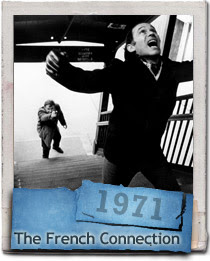 The first film on my list is The French Connection (1971), photographed by Owen Roizman, for which he received the Oscar, and directed by William Friedkin.
In my next posting we’ll examine some of the principle components of cinematography that make this film so special. Stay tuned…..
 The first film on my list is The French Connection (1971), photographed by Owen Roizman, for which he received the Oscar, and directed by William Friedkin.
In my next posting we’ll examine some of the principle components of cinematography that make this film so special. Stay tuned…..
Tuesday, January 15, 2008
Greetings
Hello Everybody,
Welcome to the start-up Post for Edisto Cam, my new blog. Edisto Cam is about filmmaking in general and cinematography in particular. That's because I'm a cinematographer. However, please be advised that heretofore, unless otherwise stated, references to cinematography and camera work will include both physical cinematography and electronic cinematography. Physical simply refers to film running through the camera and electronic refers to video production of all types - analog/standard definition; digital/wide screen; 24p; 1080i, etc.
We'll be talking a about technology but real cinema creativity comes from the mind, the hand and the heart. And Life Experience also plays a big role. Quoting the late great Director of Photography, Nestor Almendros: "Technical matters are really quite secondary in filmmaking. Far more important is taste and having a good eye."
Along the same line of thought, DP Haskell Wexler wrote: "I don't think technology is either good or bad. We get so excited about some device that we don't think about what we are doing."
In other words, the thought process is most important. Nine tenths of cinematography is in the brain - visualizing and designing the overall approach to an assignment. Think in a 360 degree pattern all the time. Tune into whatever is going on around you at all times. Think in terms of visuals and audio. Observe movement, lighting, conversations or ramdom sounds. Connect in you mind what you observe in life with a pending assignment; connect in your mind whatever films you see with pending assignments; take notes when you can but after a while you 'll find your visual retention skills improving.
For example: If you are in a restaurant, note how the light, whatever its source, falls on the faces of people around you; on the waitstaff and other diners as they move through the space.
When you are in a movie theater, turn around and note how the light from the screen dances on faces in the audience. When you're watching television with friends, see how the light from the tv screen dances on faces and other local surfaces in the room. If you are in a shopping mall, observe how light works throughout the entire space. Tune into conversations between people. If you happen on something interesting to watch or listen to, follow along in a unobstrusive fashion, noting whatever variations happen in the process.
Look, see, listen, feel. Feel the struggle when observing challenging subjects. Watch the news. The airwaves are full of challenges.
Well, that's enough for what I hope is an inspiring introduction to Edisto Cam. Next posting we'll continue with the thought process and examine how one might link the fundementals of life watching with practical and technical applications of cinematography - i.e. shot composition and all that goes on in the frame.
We'll be in touch. Good hunting.
Frost
Welcome to the start-up Post for Edisto Cam, my new blog. Edisto Cam is about filmmaking in general and cinematography in particular. That's because I'm a cinematographer. However, please be advised that heretofore, unless otherwise stated, references to cinematography and camera work will include both physical cinematography and electronic cinematography. Physical simply refers to film running through the camera and electronic refers to video production of all types - analog/standard definition; digital/wide screen; 24p; 1080i, etc.
We'll be talking a about technology but real cinema creativity comes from the mind, the hand and the heart. And Life Experience also plays a big role. Quoting the late great Director of Photography, Nestor Almendros: "Technical matters are really quite secondary in filmmaking. Far more important is taste and having a good eye."
Along the same line of thought, DP Haskell Wexler wrote: "I don't think technology is either good or bad. We get so excited about some device that we don't think about what we are doing."
In other words, the thought process is most important. Nine tenths of cinematography is in the brain - visualizing and designing the overall approach to an assignment. Think in a 360 degree pattern all the time. Tune into whatever is going on around you at all times. Think in terms of visuals and audio. Observe movement, lighting, conversations or ramdom sounds. Connect in you mind what you observe in life with a pending assignment; connect in your mind whatever films you see with pending assignments; take notes when you can but after a while you 'll find your visual retention skills improving.
For example: If you are in a restaurant, note how the light, whatever its source, falls on the faces of people around you; on the waitstaff and other diners as they move through the space.
When you are in a movie theater, turn around and note how the light from the screen dances on faces in the audience. When you're watching television with friends, see how the light from the tv screen dances on faces and other local surfaces in the room. If you are in a shopping mall, observe how light works throughout the entire space. Tune into conversations between people. If you happen on something interesting to watch or listen to, follow along in a unobstrusive fashion, noting whatever variations happen in the process.
Look, see, listen, feel. Feel the struggle when observing challenging subjects. Watch the news. The airwaves are full of challenges.
Well, that's enough for what I hope is an inspiring introduction to Edisto Cam. Next posting we'll continue with the thought process and examine how one might link the fundementals of life watching with practical and technical applications of cinematography - i.e. shot composition and all that goes on in the frame.
We'll be in touch. Good hunting.
Frost
Subscribe to:
Posts (Atom)